February 9, 2026
220V vs 380V Welders: What Buyers Should Check First
Before comparing 230A, 280A, 350A or 500A welding machines, buyers should confirm voltage, phase, frequency and real worksite power first.
Start from your welding process
Verify before inquiry
Filter real weld tests by process and model
Manufacturing, checks, tuning, and export-ready details
Catalogs, spec sheets, and support documents
Buyer guides, process notes, and RFQ resources
Common buyer questions before technical discussion
Ask for manuals, test records, or certificates
Send your welding equipment requirements to our team.
Choose language
Български (Bulgarian) BG Українська (Ukrainian) UK Русский (Russian) RU Беларуская (Belarusian) BE Hrvatski (Croatian) HR Српски (Serbian) SR Bosanski (Bosnian) BS Slovenščina (Slovenian) SL Ελληνικά (Greek) EL Türkçe (Turkish) TR Polski (Polish) PL Română (Romanian) RO Čeština (Czech) CS Magyar (Hungarian) HU Slovenčina (Slovak) SKA practical distributor framework for recommending MIG/MAG welders by material, workload, input power, cooling, feeder structure and control style.
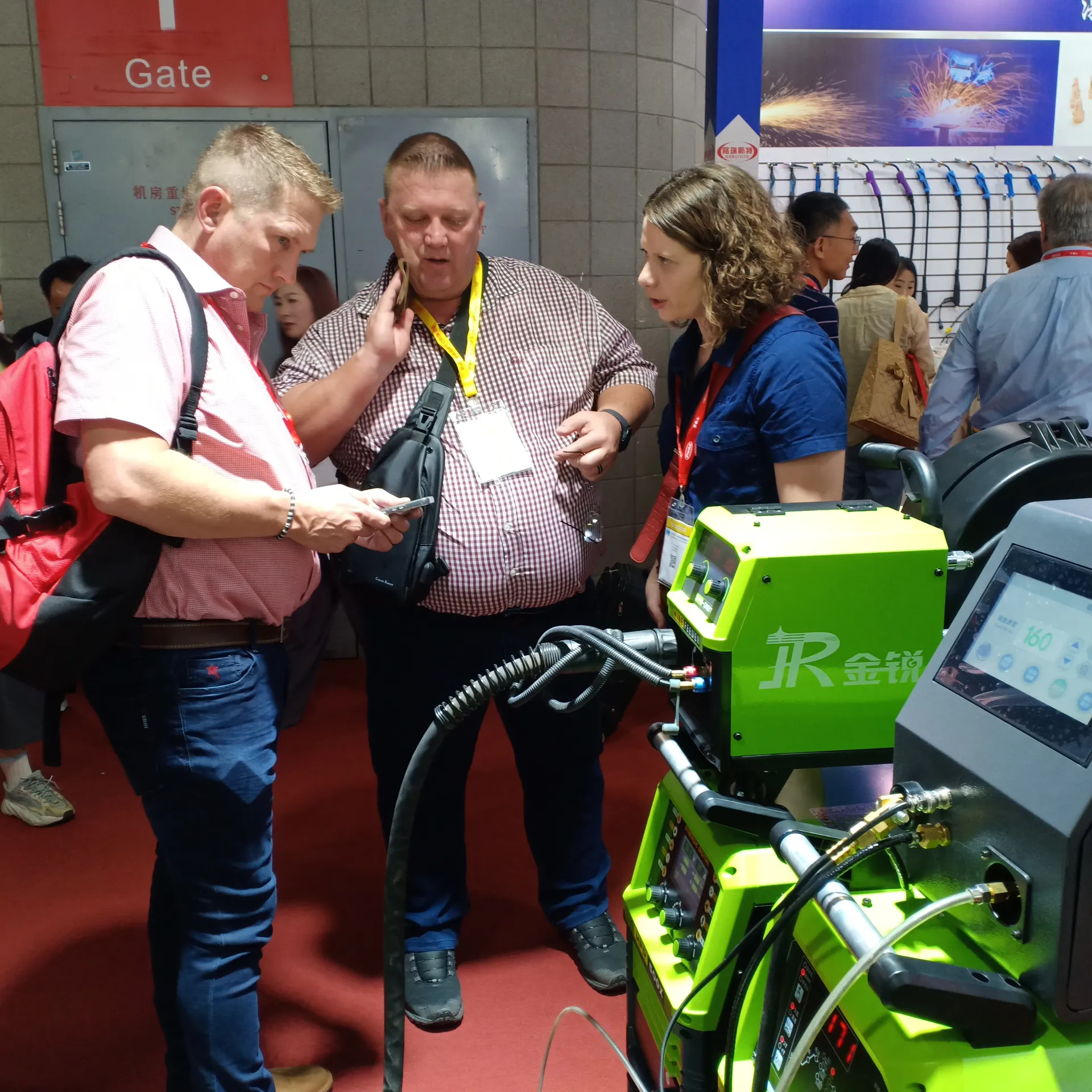
A practical distributor framework for recommending MIG/MAG welders by material, workload, input power, cooling, feeder structure and control style.
A good welding distributor does not recommend a machine by amperage alone.
The right recommendation starts with the customer’s job.
If a buyer asks for a MIG welder, the distributor should not immediately jump to one model. First, ask what the machine needs to do.
The goal is simple:
Match the welder to the material, workload, input power and production reality.
The first questions should be about the work, not the model.
Ask:
These questions prevent the most common mistake: recommending by workshop size or maximum current alone.
A small workshop may need a larger machine if it welds thick material or runs continuously. A large shop may not need a high-output machine if the work is light and intermittent.
Before recommending a 350A or 500A machine, confirm the available input power.
Ask:
Input power can limit real output. A high-output machine needs enough power supply to behave like a high-output machine.
For export markets, voltage and phase should be part of every serious RFQ.
Material thickness tells you how much current may be needed. Production intensity tells you how hard the machine will work.
Ask:
This is where duty cycle becomes important.
If the customer welds thin material occasionally, a smaller machine may be enough.
If the customer welds thin material all day, a larger machine may still be the practical choice.
Cooling should match the workload.
Ask:
Air-cooled systems are often enough for repair and short welds.
Water-cooled systems are better suited for longer, hotter and more continuous work.
Do not sell water cooling only as a premium feature. Sell it when the job creates enough heat to justify it.
Wire feeder structure matters in real work.
Ask:
Integrated machines are practical for smaller workshops and mobile use.
Separate wire feeders are useful when the power source can stay in one place while the feeder moves closer to the work.
Not every buyer needs an LCD digital machine.
Ask:
Knob-control machines can be practical and direct.
LCD digital machines are better suited when repeatable settings, expert modes, wire-feed feedback and advanced process control matter.
Aluminum changes the recommendation.
Ask:
TIG is often chosen for refined control and appearance. Pulse MIG is often chosen for speed, wire feeding and production efficiency.
Use this practical path:
| Customer answer | Likely direction |
|---|---|
| Light repair, thin material, limited power | Smaller MIG/MAG class |
| Medium workshop, more regular fabrication | 280A or 350A class |
| Long welds, thicker material, production | 350A or 500A class |
| Continuous high-duty work | Larger machine, consider water cooling |
| Aluminum production | Pulse MIG or AC/DC TIG depending on priority |
| High repeatability needed | LCD digital model |
| Large workpiece or shipyard-style work | Separate wire feeder |
This table is not a replacement for engineering confirmation. It is a better first conversation.
Distributors can use this checklist:
With these answers, a distributor can recommend a machine more responsibly before final technical confirmation.
Deyun works best with distributors who stay close to welding users.
The right partner does not only sell a model number. They understand the customer’s material, power supply, workload and service expectations.
Deyun distributor discussions can include:
The goal is to help local partners explain the product range clearly and support customers with the right information after the sale.
Keep learning with more stories from our team.
Before comparing 230A, 280A, 350A or 500A welding machines, buyers should confirm voltage, phase, frequency and real worksite power first.
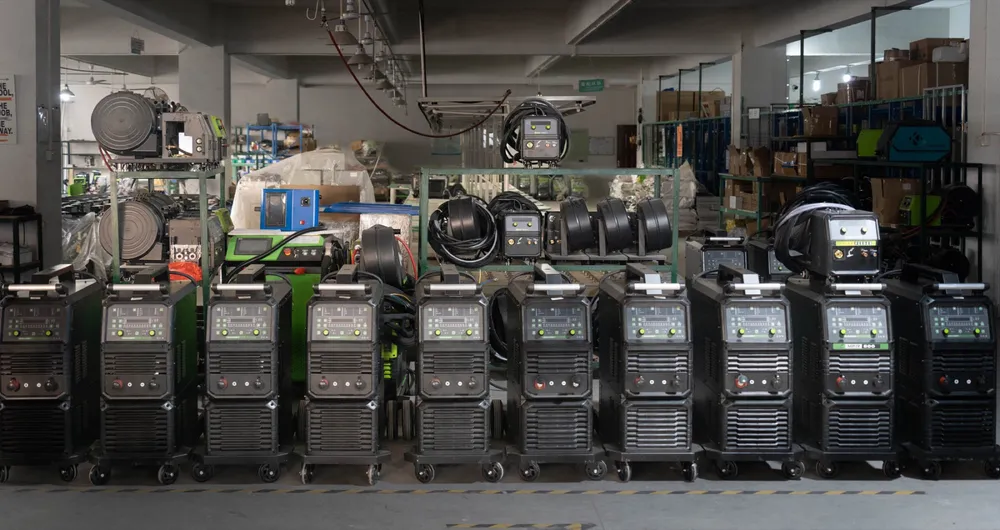
A practical guide for matching MIG/MAG output class to material thickness, workload, input power, duty cycle and cooling needs.