February 27, 2026
280A vs 350A vs 500A MIG Welders: How to Choose the Right Output Class
A practical guide for matching MIG/MAG output class to material thickness, workload, input power, duty cycle and cooling needs.
Start from your welding process
Verify before inquiry
Filter real weld tests by process and model
Manufacturing, checks, tuning, and export-ready details
Catalogs, spec sheets, and support documents
Buyer guides, process notes, and RFQ resources
Common buyer questions before technical discussion
Ask for manuals, test records, or certificates
Send your welding equipment requirements to our team.
Choose language
Български (Bulgarian) BG Українська (Ukrainian) UK Русский (Russian) RU Беларуская (Belarusian) BE Hrvatski (Croatian) HR Српски (Serbian) SR Bosanski (Bosnian) BS Slovenščina (Slovenian) SL Ελληνικά (Greek) EL Türkçe (Turkish) TR Polski (Polish) PL Română (Romanian) RO Čeština (Czech) CS Magyar (Hungarian) HU Slovenčina (Slovak) SKBefore comparing 230A, 280A, 350A or 500A welding machines, buyers should confirm voltage, phase, frequency and real worksite power first.
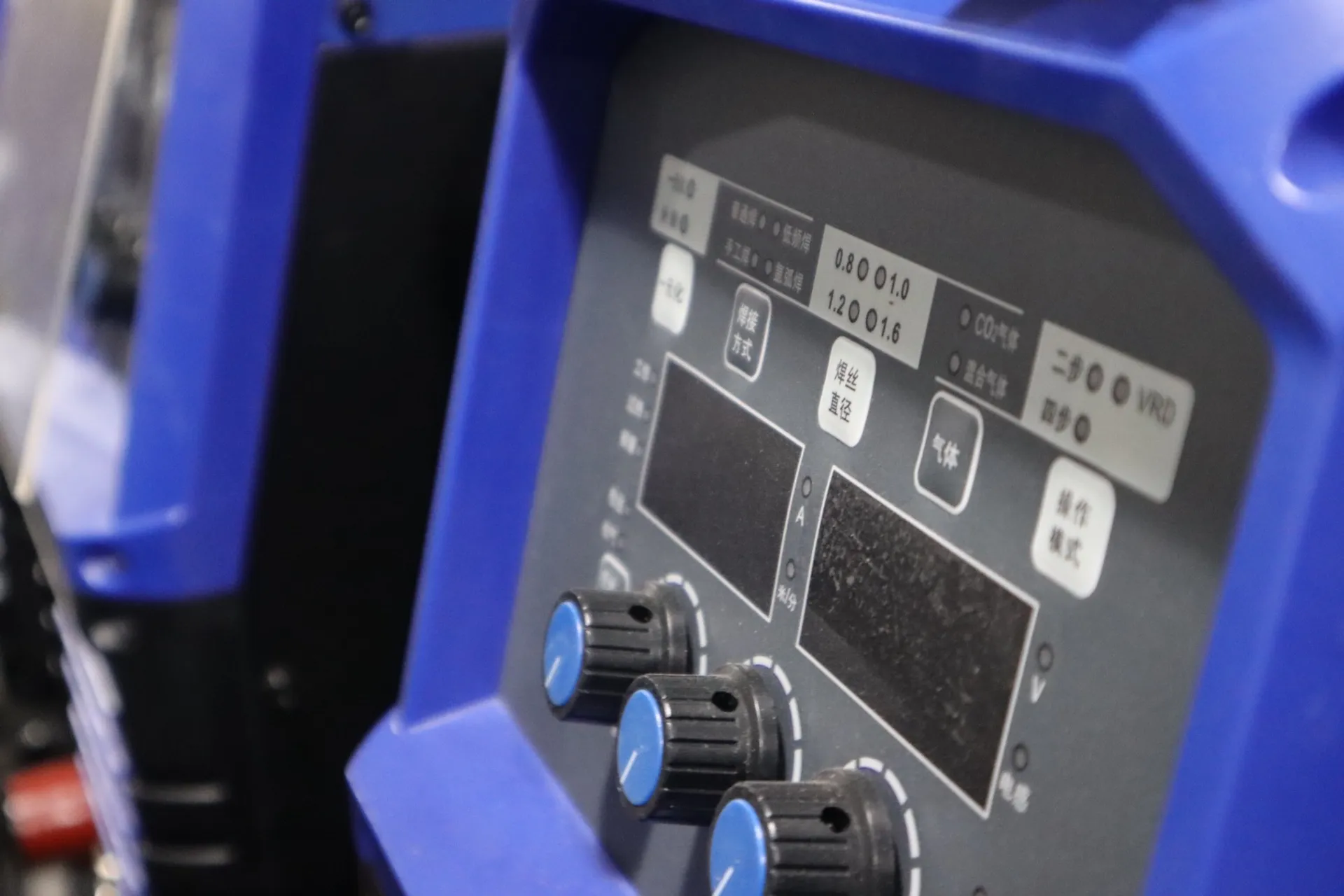
Before comparing 230A, 280A, 350A or 500A welding machines, buyers should confirm voltage, phase, frequency and real worksite power first.
Before comparing 230A, 280A, 350A or 500A welders, check one thing first:
What input power is available at the worksite?
This sounds basic, but it often decides the whole selection.
A machine can only perform properly when the available power supply can support the welding output. If the input power is wrong, the model number on the front panel will not solve the problem.
Many buyers compare welders by output current. That is natural. A 500A machine sounds stronger than a 280A machine.
But output current depends on input power.
If a workshop only has single-phase 220V power, it should not expect the same output behavior as a machine connected to proper three-phase industrial power.
That is why input power should be confirmed before model selection.
Ask these questions first:
Single-phase power is common in homes, garages, repair shops and smaller workshops. It is useful for compact machines and lighter work.
Three-phase power is common in industrial facilities. It can support larger welders, higher output and heavier production work more effectively.
| Power condition | Typical fit | Selection note |
|---|---|---|
| Single-phase 220V | Smaller MIG/MAG, repair work, light fabrication | Good for portability and smaller jobs |
| Three-phase 220V | Selected industrial markets and custom configurations | Confirm country and model compatibility |
| Three-phase 380V | Common industrial welder input in many markets | Better fit for 350A/500A class industrial machines |
| Three-phase 440V | Used in some overseas markets | Requires model and market confirmation |
The exact voltage system differs by country. Some markets may require multiple voltage versions across the same product family.
It is sometimes possible to customize a large welder for a lower input voltage. But voltage customization does not remove the limits of the power supply.
For example, a high-output machine configured for single-phase input may not deliver the same maximum output as the same machine configured for stronger three-phase input.
This is not a branding issue. It is an electrical reality.
The buyer-facing rule is:
A large machine still needs enough input power to behave like a large machine.
That is why buyers should not only ask, “Can you make this machine for my voltage?” They should also ask:
Export markets often require voltage customization.
A distributor in one country may need single-phase 220V. Another market may need three-phase 220V, 380V or 440V. Some regions may use more than one power system.
Deyun can discuss voltage configurations for selected models and markets, but buyers should treat this as a technical configuration, not just a checkbox.
Before ordering a customized voltage version, confirm:
| Item to confirm | Why it matters |
|---|---|
| Voltage and phase | Prevents mismatch at installation |
| Frequency | Some countries use different frequency standards |
| Output range | Confirms whether the machine still meets the job |
| Duty cycle | Confirms continuous working ability |
| Certification needs | Some markets require specific electrical compliance |
| Quantity and lead time | Custom builds may affect cost and delivery |
For distributors, this should be part of the RFQ process. Do not wait until after quotation to discover that the local market power supply is different.
When asking for a welder recommendation, send this information:
This helps the supplier recommend a realistic machine, not just a model that looks correct on paper.
Suppose a buyer wants a 500-class MIG welder.
The first response should not be only:
Yes, we have a 500A model.
A better response is:
What input power do you have? Is it three-phase? What material and thickness are you welding? How long will the machine work each day?
If the buyer has proper three-phase industrial power, the 500-class machine may be suitable.
If the buyer only has single-phase 220V, the supplier should check whether a smaller model, a custom configuration or a different recommendation is more practical.
Use this rule:
Input power decides what the machine can actually deliver. Output class tells you what the machine is designed to do.
Both matter.
If you only compare output current and ignore input power, you may choose a machine that cannot perform properly in your workshop.
Deyun helps buyers and distributors match welding machines to real operating conditions, including input power, material, thickness, duty cycle and target market requirements.
When you send an inquiry, include your local power supply information. It will make the recommendation faster and more accurate.
Keep learning with more stories from our team.
A practical guide for matching MIG/MAG output class to material thickness, workload, input power, duty cycle and cooling needs.
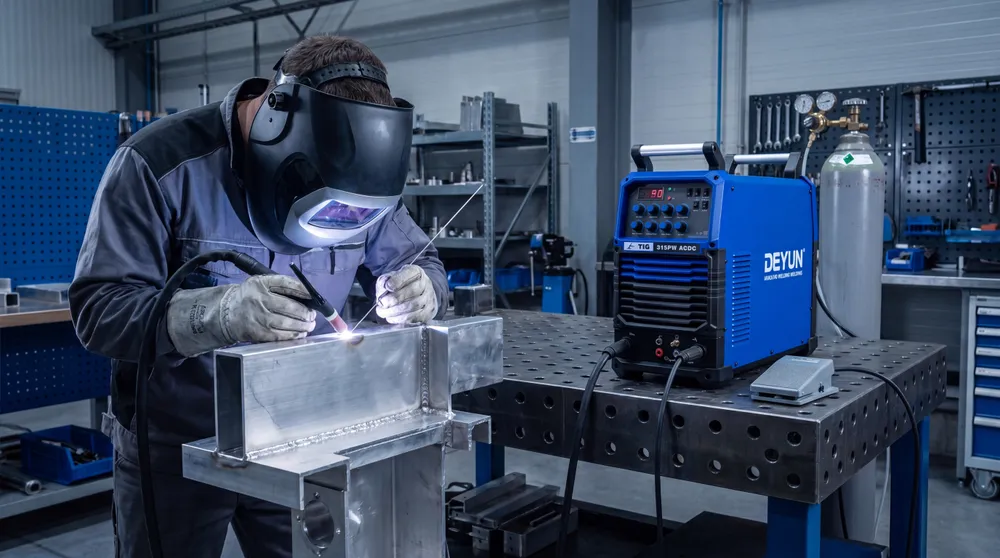
A practical way for buyers to start from material, thickness, weld result, and production use before comparing welding machine models.