February 9, 2026
220V vs 380V Welders: What Buyers Should Check First
Before comparing 230A, 280A, 350A or 500A welding machines, buyers should confirm voltage, phase, frequency and real worksite power first.
Start from your welding process
Verify before inquiry
Filter real weld tests by process and model
Manufacturing, checks, tuning, and export-ready details
Catalogs, spec sheets, and support documents
Buyer guides, process notes, and RFQ resources
Common buyer questions before technical discussion
Ask for manuals, test records, or certificates
Send your welding equipment requirements to our team.
Choose language
Български (Bulgarian) BG Українська (Ukrainian) UK Русский (Russian) RU Беларуская (Belarusian) BE Hrvatski (Croatian) HR Српски (Serbian) SR Bosanski (Bosnian) BS Slovenščina (Slovenian) SL Ελληνικά (Greek) EL Türkçe (Turkish) TR Polski (Polish) PL Română (Romanian) RO Čeština (Czech) CS Magyar (Hungarian) HU Slovenčina (Slovak) SKMaximum current tells buyers how high a machine can go, but duty cycle shows how much real welding work it can carry.
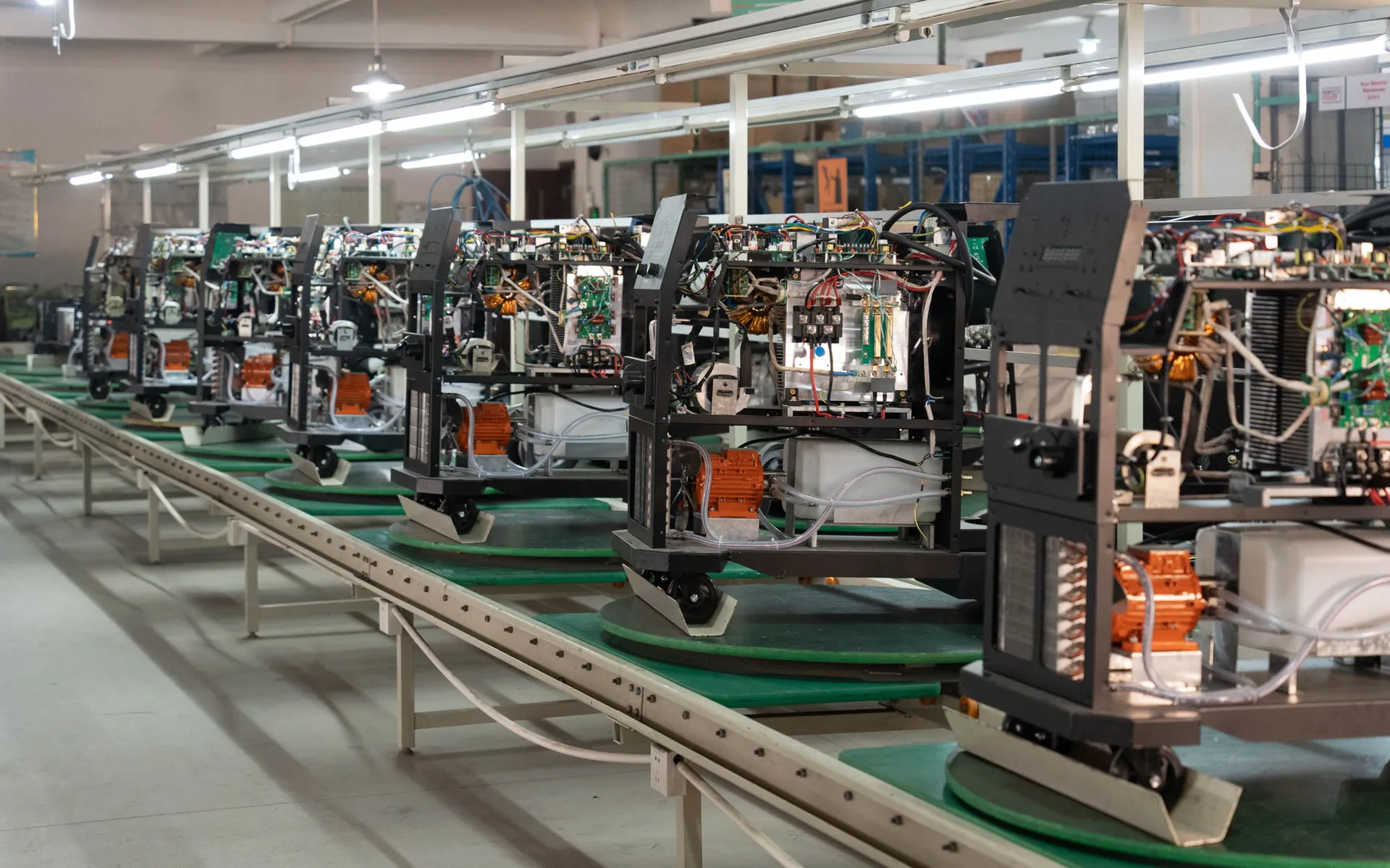
Maximum current tells buyers how high a machine can go, but duty cycle shows how much real welding work it can carry.
Many buyers and sales teams start welder selection by comparing amperage:
230A, 280A, 350A or 500A?
That comparison matters, but it is not enough.
A 500A welder is not automatically the right machine for every job. A 230A or 280A welder is not automatically too small for every workshop. The better question is:
How much welding work does the machine need to carry, and for how long?
This is where duty cycle becomes important.
The number in a model name, such as 230, 280, 350 or 500, usually points to the output class of the machine. It helps you understand the general power level.
But maximum current does not tell you everything.
To choose the right welder, you also need to know:
Two workshops may both weld 1 mm sheet metal. One may weld a few short repairs per day. The other may run the same thin-material welds continuously in production. They do not need the same machine.
Duty cycle tells you how long a welder can operate within a set time period before it needs cooling time.
In practical welding-machine specifications, duty cycle is usually explained over a 10-minute cycle.
For example:
| Duty cycle | Plain meaning over 10 minutes |
|---|---|
| 40% | Weld for 4 minutes, cool for 6 minutes |
| 60% | Weld for 6 minutes, cool for 4 minutes |
| 100% | Weld continuously for the full 10 minutes |
So if a machine is rated at 60% duty cycle at a certain output, it means the machine can weld for 6 minutes and then needs 4 minutes of cooling under that rated condition.
The key phrase is: under that rated condition.
Duty cycle depends on output current, heat load and machine design. When the welding current is lower, the machine produces less heat and can usually work longer. When the current is higher, heat builds faster and the machine reaches its thermal limit sooner.
Many buyers assume thin material always needs a small machine. That is not always true.
Thin material may require lower current, but production intensity can still be high.
For example, a workshop welding thin stainless tube may only need 80-100A during welding. If the work is occasional, a smaller machine may be enough. But if the production line runs for long hours with little downtime, the machine needs stronger thermal capacity and a higher duty-cycle margin.
The same logic applies to aluminum formwork, repetitive fabrication, long welds and any job where the machine is expected to keep working all day.
In other words:
Thin material decides current. Continuous production decides machine class.
That is why a high-output welder can make sense even when the actual welding current is far below the maximum output.
Undersizing a welder is like asking a small engine to pull a heavy load all day.
It may work for a short time. It may even make a good-looking test weld. But under real production pressure, the machine may run hotter, need more cooling time, slow the operator down or reduce consistency.
For light repair work, choosing a smaller machine can be the smart choice. It saves cost, space and weight.
For continuous production, heavy fabrication or long welds, choosing too small a machine can create hidden cost:
The right machine is not always the biggest one. But it should not be too small for the real job.
A 500A welder is not only for welding at 500A all day.
It is useful when the job requires high load capacity, long welds, thicker material or continuous operation.
Consider a 500-class machine when:
| Situation | Why a larger machine may help |
|---|---|
| Long welds | More thermal capacity for extended operation |
| Heavy fabrication | Better margin for higher output and thicker material |
| Continuous production | Less pressure on duty cycle |
| Water-cooled setup | Better fit for high heat and longer welding time |
| Multiple shifts or long working hours | More reserve capacity |
| Aluminum or stainless production | More stable operation when process demands are high |
This does not mean every buyer needs 500A.
If you weld thin sheet metal occasionally, a 500A machine may be more than you need. But if you weld thin material all day in a production environment, the larger machine may still be the practical choice.
A smaller welder can be the better choice when the work is lighter, more mobile or less continuous.
For example, a 220A or 230-class MIG/MAG welder may fit:
A 280A-class machine may fit users who need more capability than a small portable machine, but do not need full industrial 350A or 500A capacity.
A 350A-class machine often becomes the practical middle ground for fabrication shops that need more output, longer welds and more industrial use, but do not always need a 500A setup.
The right answer depends on workload, not just the number printed on the machine.
Duty cycle is not the only practical limit. Input power also matters.
A large welder needs enough electrical supply to deliver high output. If the workshop only has single-phase 220V power, it cannot expect the same output behavior as a proper three-phase industrial power supply.
Some machines can be customized for different voltages. That is useful for export markets where input power differs by country or region.
But voltage customization does not remove the physics of power supply. A high-output welder running on limited input power may not deliver the same maximum output as the same machine configured for a stronger three-phase supply.
Before choosing a machine, confirm:
For many buyers, input power should be checked before comparing model numbers.
Cooling method is closely related to duty cycle and working intensity.
Air-cooled systems can be enough for repair work, short welds and lighter use. They are simpler and often more cost-effective.
Water-cooled systems are useful when welding time, current and heat load increase. They help manage heat in longer or heavier work and can improve operator comfort with a water-cooled torch setup.
Choose water cooling when:
Do not choose water cooling only because it sounds more advanced. Choose it because the job creates enough heat to justify it.
Before choosing between a 230A, 280A, 350A or 500A machine, ask these questions.
| Question | Why it matters |
|---|---|
| What material are you welding? | Steel, stainless steel and aluminum may need different processes and settings |
| How thick is the material? | Thickness affects current and penetration needs |
| How long are the welds? | Longer welds increase heat load |
| Is the work occasional or continuous? | Continuous work increases duty-cycle demand |
| What input power is available? | Power supply can limit real output |
| Do you need air-cooled or water-cooled operation? | Cooling affects comfort and longer work |
| Is the welder used for repair or production? | Production needs more consistency and reserve capacity |
| Is the budget tight or flexible? | Cost affects how much reserve capacity is practical |
This framework prevents two common mistakes:
Use this rule when comparing welders:
Maximum current tells you how large the machine can go. Duty cycle tells you how much work it can carry.
For occasional repair, maximum current and portability may matter more.
For production welding, duty cycle, input power, cooling and workload matter more.
For distributors, this is also the right way to recommend machines. Do not ask only, “How many amps do you want?” Ask what the customer welds, how thick it is, how long they weld, and how hard the machine will work each day.
Deyun machines are built for practical welding work, not just specification-sheet comparison.
When you contact Deyun or a Deyun distributor, the most useful information is:
With that information, it is easier to recommend the right output class, not just the biggest number.
The goal is simple: choose a welder that can carry the real job without paying for capacity you do not need.
Keep learning with more stories from our team.
Before comparing 230A, 280A, 350A or 500A welding machines, buyers should confirm voltage, phase, frequency and real worksite power first.
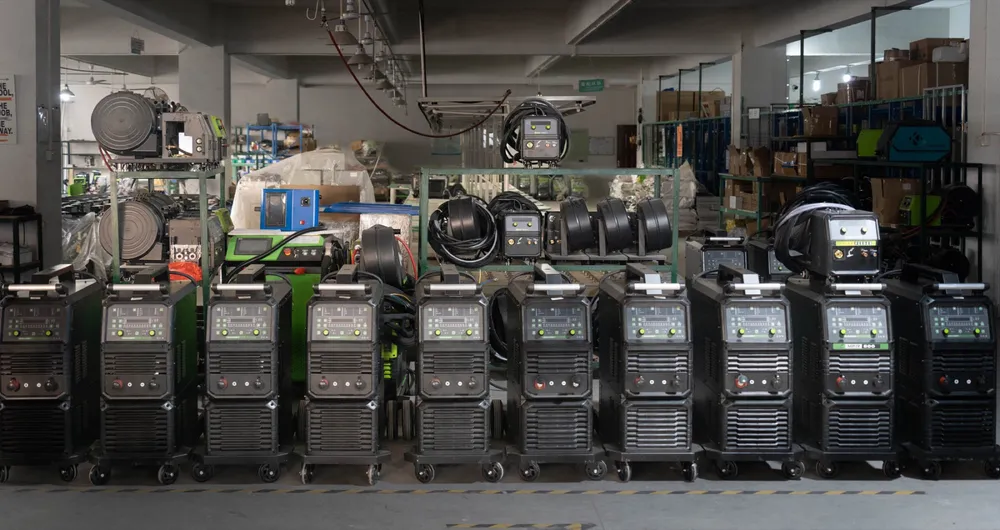
A practical guide for matching MIG/MAG output class to material thickness, workload, input power, duty cycle and cooling needs.