February 9, 2026
220V vs 380V Welders: What Buyers Should Check First
Before comparing 230A, 280A, 350A or 500A welding machines, buyers should confirm voltage, phase, frequency and real worksite power first.
Start from your welding process
Verify before inquiry
Filter real weld tests by process and model
Manufacturing, checks, tuning, and export-ready details
Catalogs, spec sheets, and support documents
Buyer guides, process notes, and RFQ resources
Common buyer questions before technical discussion
Ask for manuals, test records, or certificates
Send your welding equipment requirements to our team.
Choose language
Български (Bulgarian) BG Українська (Ukrainian) UK Русский (Russian) RU Беларуская (Belarusian) BE Hrvatski (Croatian) HR Српски (Serbian) SR Bosanski (Bosnian) BS Slovenščina (Slovenian) SL Ελληνικά (Greek) EL Türkçe (Turkish) TR Polski (Polish) PL Română (Romanian) RO Čeština (Czech) CS Magyar (Hungarian) HU Slovenčina (Slovak) SKA practical comparison of TIG and pulse MIG for aluminum welding, including appearance, production speed, operator skill and application fit.
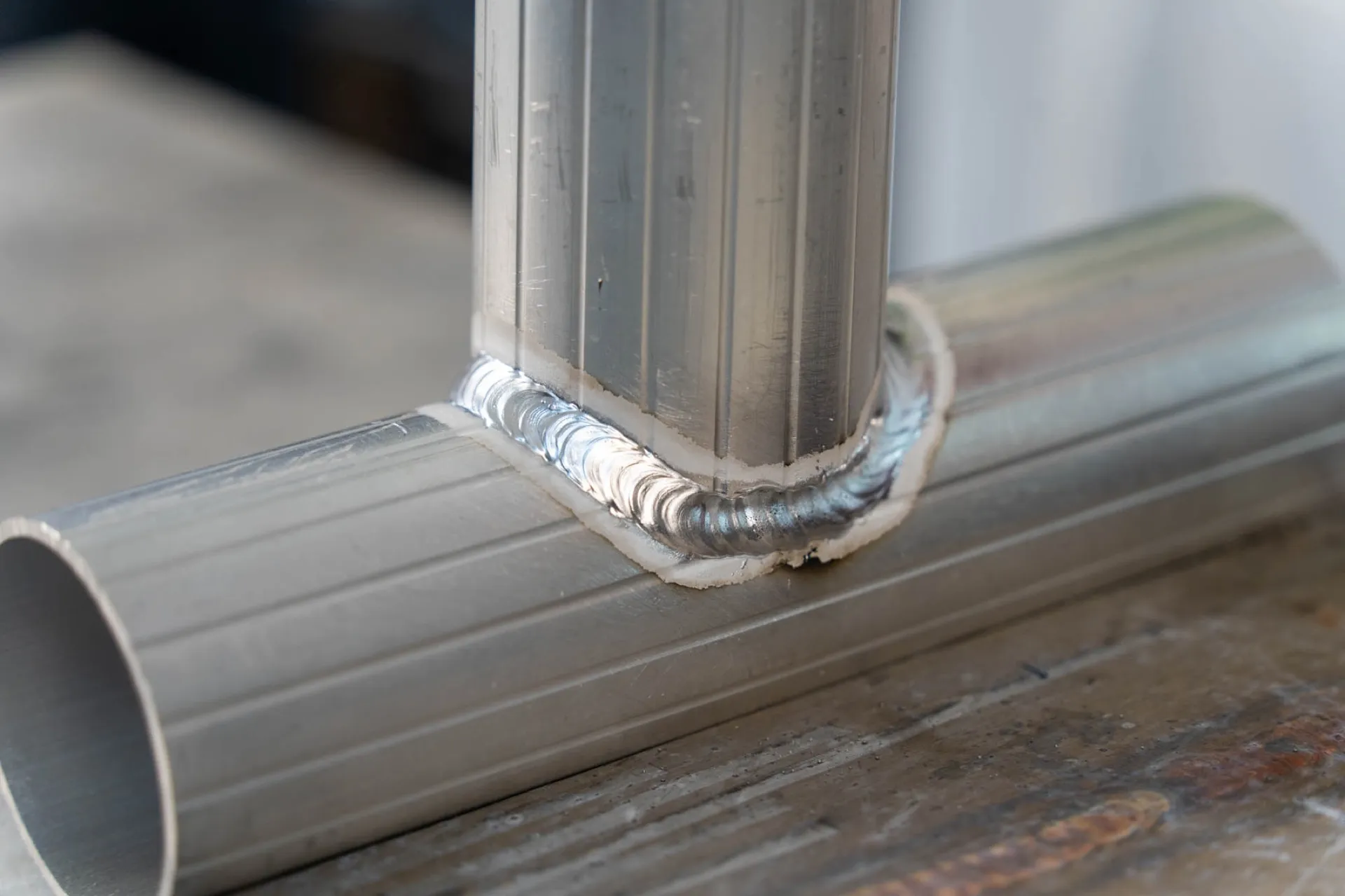
A practical comparison of TIG and pulse MIG for aluminum welding, including appearance, production speed, operator skill and application fit.
Aluminum welding often leads to one simple question:
Should I use TIG or MIG?
The practical answer is:
Consider TIG when weld quality and fine control matter most. Consider pulse MIG when speed, productivity and easier operation matter more.
Both processes can be useful. They solve different problems.
TIG welding is widely used when the weld needs to be clean, controlled and visually refined.
For aluminum, AC TIG is especially important because aluminum oxide must be managed during welding. Skilled TIG welders can produce very attractive welds with good heat control.
TIG is often preferred for:
But TIG also has tradeoffs.
The operator usually holds the torch with one hand and feeds filler rod with the other. In some setups, a foot pedal is also used. This gives the welder strong control, but it also requires skill and coordination.
TIG is powerful in the right hands, but it is not always the fastest process.
MIG welding uses continuous wire feeding. The wire comes through the torch, which makes it faster and easier to operate in many production environments.
Pulse MIG adds pulsed current control, which helps manage heat and transfer in more demanding applications, including aluminum welding.
Pulse MIG is often useful for:
The key advantage is potential efficiency.
TIG can produce a very refined weld, but it is usually slower. Pulse MIG is often faster and easier to scale in a workshop when the machine, wire, gas and operator setup are matched correctly.
One useful way to explain the difference is:
TIG is closer to manual control. MIG is closer to automatic transmission.
This is not a technical definition, but it helps buyers understand the workflow.
With TIG, the welder controls the torch, filler rod and sometimes foot pedal. With MIG, the wire feeding is built into the process, so operation can be easier and faster.
For a highly skilled welder, TIG offers excellent control.
For a production shop, pulse MIG may reduce the skill barrier and improve speed.
In many high-quality applications, TIG produces the more refined weld appearance.
But modern pulse MIG can also produce very good aluminum welds when the machine, wire, gas, settings and operator are matched correctly.
The point is not that one process is always better.
The point is:
TIG is usually chosen for control and appearance. Pulse MIG is usually chosen for speed and productivity.
In many workshop situations, MIG is easier to start with.
The operator does not need to manually feed a separate filler rod. The wire is fed through the torch. This can make training easier and may improve productivity.
TIG requires more hand coordination and more practice, especially on aluminum.
That does not make TIG worse. It means TIG requires a different level of operator skill.
Choose TIG when:
| Situation | Why TIG may fit |
|---|---|
| Appearance is very important | TIG gives strong visual control |
| The part is delicate | Heat input can be controlled carefully |
| The work is precision repair | Manual control helps |
| The welder is skilled | TIG rewards operator skill |
| Production speed is less critical | Quality can take priority |
Choose pulse MIG when:
| Situation | Why pulse MIG may fit |
|---|---|
| Production speed matters | Wire feeding can improve efficiency |
| Welds are long or repetitive | Better for repeated work |
| The shop needs easier operation | Less manual filler coordination |
| Higher deposition is needed | MIG is typically faster than TIG in production setups |
| Aluminum fabrication needs throughput | Pulse control helps manage heat and transfer |
Before choosing TIG or pulse MIG for aluminum, tell the supplier:
This information helps decide whether TIG, pulse MIG or both should be recommended.
Deyun focuses strongly on practical MIG/MAG welding because many workshops need speed, productivity and usable welding performance at a reasonable cost.
But that does not mean TIG is unimportant.
For aluminum welding, TIG and pulse MIG should be selected by the job:
The right choice is not about which process sounds more advanced. It is about what the work actually needs.
Keep learning with more stories from our team.
Before comparing 230A, 280A, 350A or 500A welding machines, buyers should confirm voltage, phase, frequency and real worksite power first.
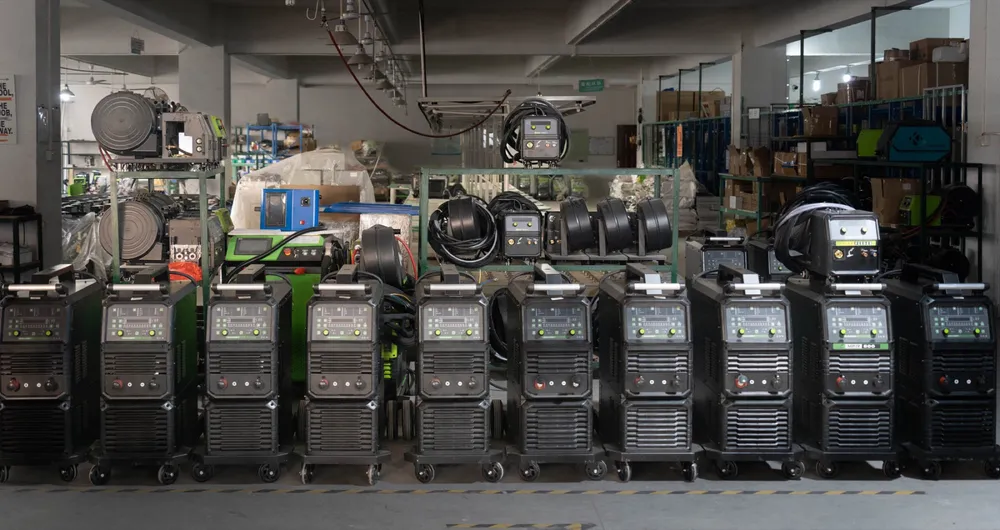
A practical guide for matching MIG/MAG output class to material thickness, workload, input power, duty cycle and cooling needs.