February 9, 2026
220V vs 380V Welders: What Buyers Should Check First
Before comparing 230A, 280A, 350A or 500A welding machines, buyers should confirm voltage, phase, frequency and real worksite power first.
Start from your welding process
Verify before inquiry
Filter real weld tests by process and model
Manufacturing, checks, tuning, and export-ready details
Catalogs, spec sheets, and support documents
Buyer guides, process notes, and RFQ resources
Common buyer questions before technical discussion
Ask for manuals, test records, or certificates
Send your welding equipment requirements to our team.
Choose language
Български (Bulgarian) BG Українська (Ukrainian) UK Русский (Russian) RU Беларуская (Belarusian) BE Hrvatski (Croatian) HR Српски (Serbian) SR Bosanski (Bosnian) BS Slovenščina (Slovenian) SL Ελληνικά (Greek) EL Türkçe (Turkish) TR Polski (Polish) PL Română (Romanian) RO Čeština (Czech) CS Magyar (Hungarian) HU Slovenčina (Slovak) SKLCD control matters when buyers need repeatable settings, finer parameter control, pulse-mode switching and more controlled production welding.
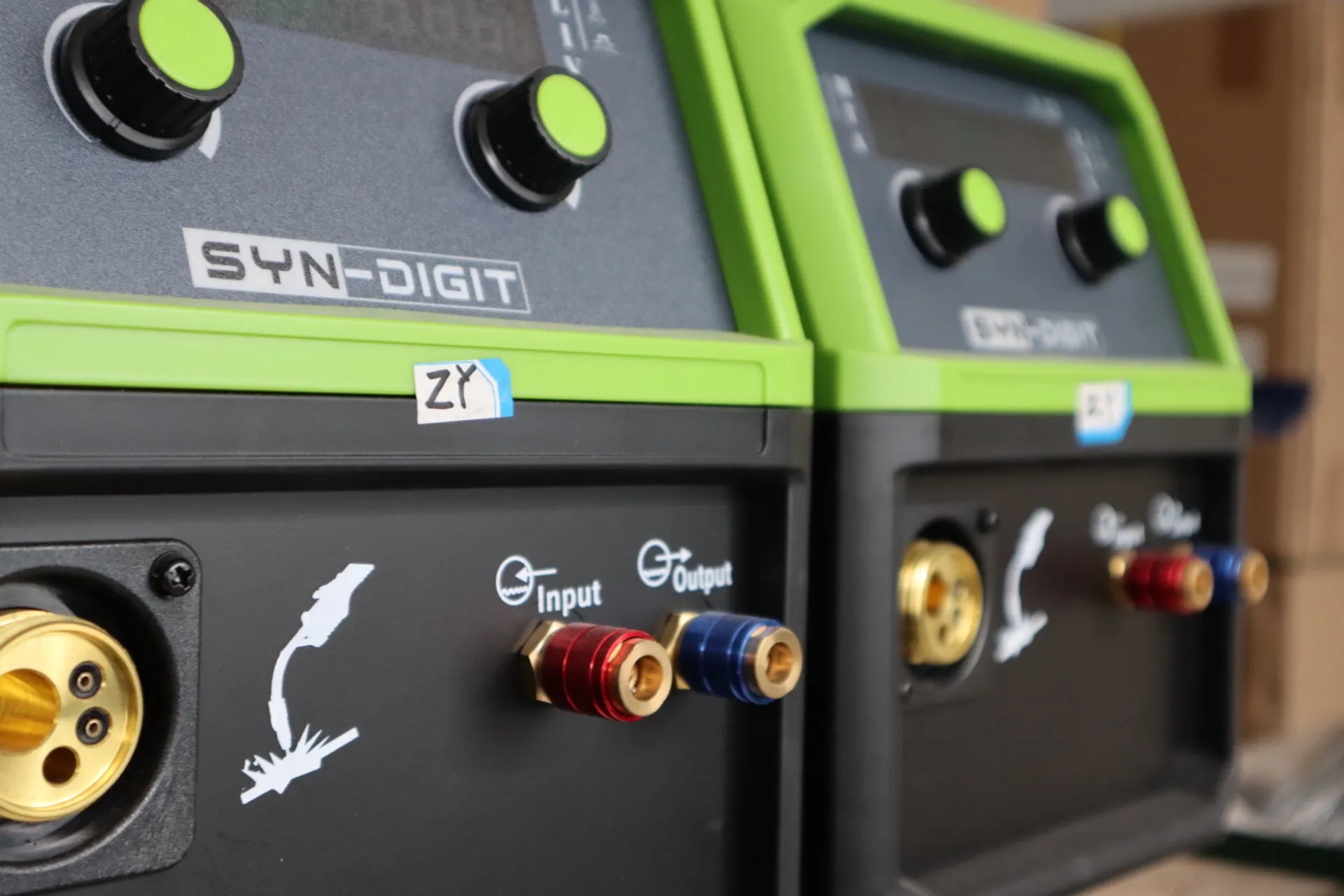
LCD control matters when buyers need repeatable settings, finer parameter control, pulse-mode switching and more controlled production welding.
An LCD digital MIG welder is not valuable because it has a screen.
The screen is only the visible part.
The real value is what the digital system can help the welder do:
That is why the question should not be:
Does this machine have an LCD?
The better question is:
Do I need repeatable settings, finer control and more controlled production welding?
Not every buyer needs an LCD machine.
Knob-controlled machines are direct, familiar and practical. For many repair jobs, light fabrication tasks and simple welding needs, knob control can be enough.
Choose a simpler control panel when:
Simple does not mean weak. It means the machine is built for a different type of user.
LCD control becomes useful when the user needs more repeatability and more precise setup.
For example, a workshop may often weld the same aluminum thickness with the same wire, gas and process. Instead of adjusting everything from zero each time, the operator can use stored or guided settings where supported.
This matters for:
The screen is not the benefit. The repeatable process behind the screen is the benefit.
In a digital MIG system, program storage can help users save parameter groups for repeated jobs.
For example:
| Job | Stored settings may include |
|---|---|
| 3 mm aluminum | current, voltage, wire speed, single-pulse or double-pulse mode, gas/wire selection |
| stainless production weld | process mode, wire diameter, gas setting, output parameters |
| repeated fabrication part | saved setup for the same weld sequence |
This is useful when the same job comes back again and again.
It is especially useful for distributors and production workshops because it can make the machine easier to demonstrate, train and repeat when the job setup is stable.
Wire feeding is central to MIG/MAG welding.
In a basic setup, the machine drives wire according to the selected settings. In a more advanced system, feedback from the wire feeding system can help the machine understand the actual wire-feed behavior more precisely.
This can support finer control and more stable operation where the model is designed for it.
For buyers, the practical meaning is:
A digital MIG welder is often not just a different front panel. It may also be part of a more controlled welding system.
Model-specific features should always be confirmed from the datasheet or product page.
For applicable Deyun pulse MIG models, single pulse and double pulse are treated as part of the same pulse-control path rather than as unrelated product stories. The practical question is which mode and parameter group fits the welding job, and the exact support should be checked on the product page.
Choose an LCD digital MIG welder when:
| Need | Why LCD/digital control may help |
|---|---|
| Repeated production | Saved settings can reduce repeated setup work |
| Aluminum welding | Pulse mode selection and parameter control matter |
| Single-pulse / double-pulse switching | Digital control helps operators choose the right mode for the job |
| Multiple operators | Presets can help improve consistency |
| Training | Guided settings can reduce setup difficulty |
| Higher-end fabrication | More control supports repeatable quality |
| Robot or special-machine integration | Digital platform may support more advanced configuration |
A simpler machine may be enough when:
In these cases, paying for advanced digital control may not be necessary.
When welding a simple, light-duty sample, different machine classes may produce similar-looking welds.
That does not mean all machines are the same.
The difference is easier to see when the job becomes harder:
That is where LCD digital models can show their value, provided the selected model supports the process and control features the job requires.
Do not ask only:
Is this model LCD?
Ask:
These questions reveal whether LCD control matters for your work.
In Deyun’s model logic, X marks the LCD or digital-control version in the current X series.
For buyers, this usually means the machine is positioned for users who need more digital setup, more repeatable parameter control and more advanced process management than a basic knob-control machine.
The final choice should still be based on the job:
Keep learning with more stories from our team.
Before comparing 230A, 280A, 350A or 500A welding machines, buyers should confirm voltage, phase, frequency and real worksite power first.
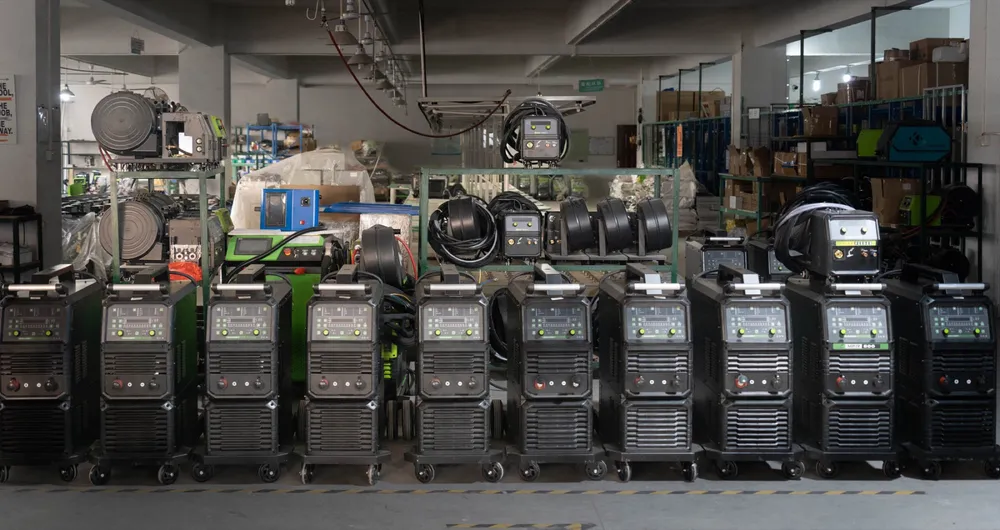
A practical guide for matching MIG/MAG output class to material thickness, workload, input power, duty cycle and cooling needs.