Spatter is a workshop cost question
Spatter is often treated as a small technical issue. In daily workshop work, it can become a cost and workflow question. Extra cleaning, grinding, or correction may affect labor time, finishing work, and customer perception.
Low-spatter welding matters because buyers should look beyond the arc and ask what happens after the weld is finished.
Where the value may appear
Cleanup time
Spatter cleanup is labor. A cleaner process may reduce the time spent removing small defects before the part moves to the next step, but the result should be checked with the actual material, wire, gas, and settings.
Grinding and finishing
Grinding is not free. It uses tools, labor, and operator attention. In some applications, less spatter may make the finish more predictable.
Rework risk
When the welding process is unstable, the workshop may spend more time correcting results. Lower spatter can be one signal to investigate, but buyers should still check penetration, bead shape, and repeatability.
Customer confidence
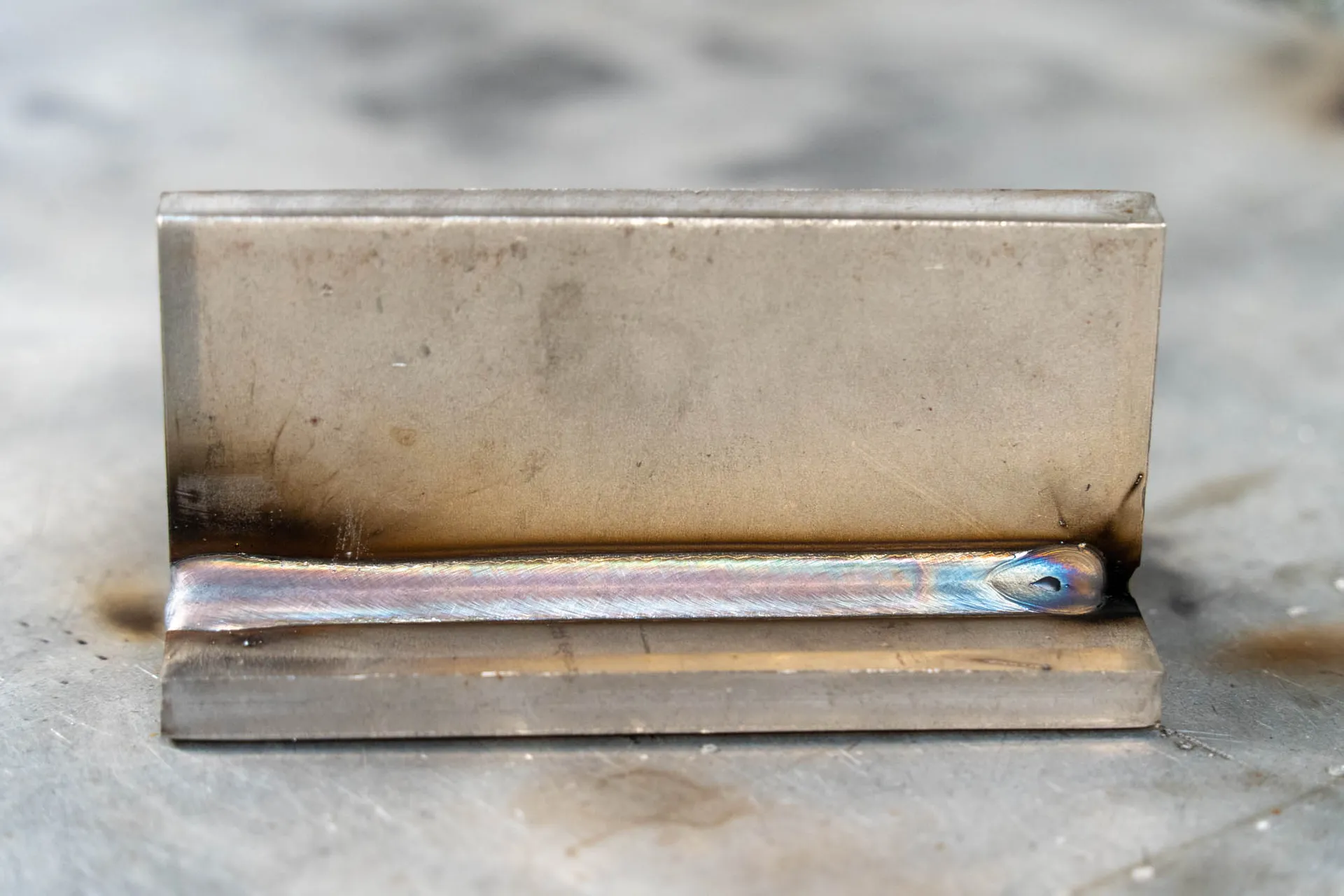
For distributors, a clean weld demo is easier to explain. The customer sees the result immediately, but the demo should be tied to a clear model, material, thickness, wire, gas, and parameter record.
What a buyer should verify
Low-spatter claims should be tied to a real application. The buyer should ask:
- What material was welded?
- What thickness was used?
- Which wire and gas were used?
- Which model and settings were used?
- Is the result repeatable in a normal workshop?
Without those details, low-spatter becomes a vague selling phrase.
Where low-spatter products fit
Low-spatter products may fit workshops that care about finishing time, repair environments that need cleaner work, and distributors who want an easy-to-demonstrate process story.
They can also help create a product path between basic MIG/MAG machines and higher-end pulse solutions, provided the buyer’s application actually needs that step.
Make the proof visible
The safest way to explain low-spatter welding is to show it. A short proof video with the right details can help buyers understand the possible value faster than a long list of claims.
That is why low-spatter products should be connected to process pages, product pages, and proof videos. The buyer should be able to move from problem to proof to RFQ without losing context.